In Q2 2026, Bloom Energy delivered remarkable results that drew widespread attention across the energy industry:
Quarterly revenue reached USD 1.065 billion, a year‑on‑year increase of 166%; order backlog exceeded USD 20 billion; full‑year revenue guidance was raised to USD 3.9‑4.2 billion, representing a year‑on‑year doubling.
This US‑based solid oxide fuel cell (SOFC) firm has swiftly become a focal point of discussion in the global energy sector.
Interestingly, SOFC is not an overnight breakthrough technology. Its origins date back to the 19th century, with a history of nearly 200 years. This “time‑honoured technology” waited across three generations before finally ushering in its era.
Having existed for so long, why is SOFC gaining momentum only now?
For more than a century, the material systems and structural designs of SOFC have become increasingly mature, yet large‑scale commercialization remained elusive. The reason is straightforward: where power grids are accessible, conventional power generation is cheap and reliable, leaving SOFC without irreplaceable application scenarios.
A turning point has emerged over the past two years. On one hand, China has made successive breakthroughs in key links including single‑cell fabrication, stack integration and sealing materials, dismantling long‑standing core‑technology barriers imposed by overseas players. On the other hand, the AI boom has created enormous power demand, enabling SOFC to address a critical pain point: power shortages with urgent delivery timelines.
Technological maturity lays the foundation, yet AI‑driven power hunger acts as the trigger.

AI training and inference require massive computing power, which is heavily reliant on electricity. Power loads of data centres are growing exponentially, while grid expansion takes 5‑10 years. Numerous newly‑built data centres cannot go into operation due to a lack of grid power access.
Core competitive strengths of SOFC:
- All‑ceramic raw materials: low‑cost, made of affordable metal oxides with no precious metals required
- Multi‑fuel power generation: compatible with hydrocarbon fuels, including hydrogen, natural gas, syngas, biomass gas, liquefied petroleum gas and coal‑bed methane
- High‑efficiency electrolysis: capable of forward fuel‑to‑power generation and reverse electrolysis for hydrogen production; delivers high‑efficiency hydrogen and syngas production
- Simple structure: compact footprint, low manufacturing and maintenance costs
- Long service life: theoretical service life up to 100,000 hours; current average design life stands at 30,000‑40,000 hours
- High efficiency: standalone power‑generation efficiency close to 60%; combined‑cycle efficiency with gas turbines exceeds 80%

These merits are not new concepts and have been documented in SOFC technical manuals for decades. Today, driven by industrial technological maturity coupled with pressing power shortages in the AI era, these long‑accumulated advantages have been fully translated into solid strengths for industry breakthroughs.
Beyond the Stack
A complete SOFC power‑generation system consists of the stack and Balance of Plant (BOP).
The stack generates electricity: at 600℃‑1000℃, solid oxide electrolytes directly convert the chemical energy of fuel into electrical energy without combustion. Free from Carnot‑cycle constraints, the system can achieve high efficiency.
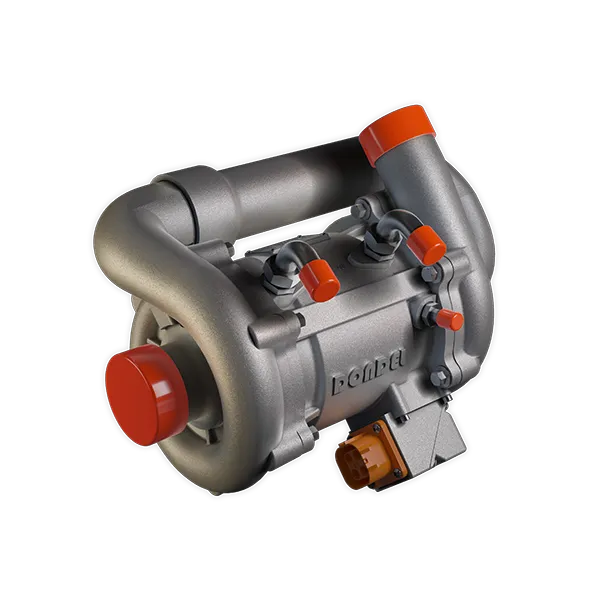
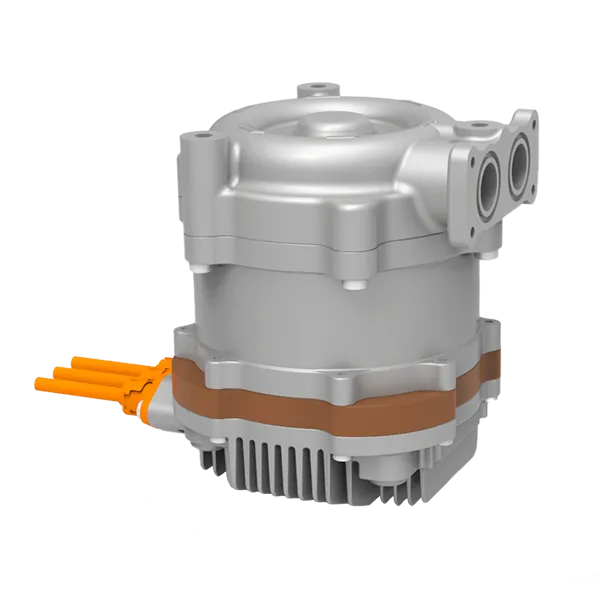
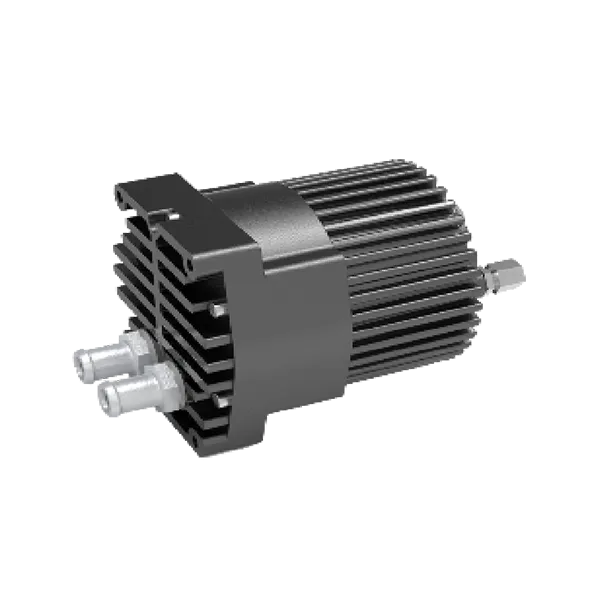
The BOP is critical to long‑term stable system operation. It covers multiple subsystems for fuel supply & recirculation, air supply, thermal management and more. Take hydrogen recirculation as an example: unreacted hydrogen at the anode needs to be circulated back to the inlet for reuse. The hydrogen blower (hydrogen recirculation pump) serves as the core equipment for this process. It must operate at high temperatures, handle highly‑leakage‑prone hydrogen medium and withstand prolonged continuous operation.
Transitioning from “power‑capable” to “stably‑power‑capable” systems hinges on BOP, which determines overall system service life.
What Yantai Dondel Hydrogen Technology Co.,Ltd. Is Doing
Founded in 2017, Yantai Dondel Hydrogen Technology Co.,Ltd. started its business by developing core BOP components for fuel‑cell systems and has maintained top domestic and global market share for consecutive years. The Company took the lead in entering the SOFC track in 2021. Drawing on its technological know‑how, it has secured a large portfolio of real‑world customer cases.
In terms of delivery track records, Yantai Dondel Hydrogen Technology Co.,Ltd.’s SOFC hydrogen recirculation pump clients include more than ten leading domestic SOFC system integrators. Every operating hour validates the performance of the Company’s products, whose sealing structures, bearing designs and material selections have stood up to real‑world operating conditions.
In terms of technological reserves, Yantai Dondel Hydrogen Technology Co.,Ltd. holds over 36 core patents covering key areas such as medium sealing, corrosion resistance and high‑reliability shaft‑system design. It has obtained IATF 16949 automotive‑industry quality‑management‑system certification as well as GJB 9001C military‑quality‑system certification.
Furthermore, targeting next‑generation SOFC systems, Yantai Dondel Hydrogen Technology Co.,Ltd. launched pre‑research for 150℃‑300℃ high‑temperature hydrogen recirculation pumps in spring 2026. Rising operating temperatures impose stricter requirements on BOP heat resistance and sealing performance. R&D and validation for such equipment is a lengthy process, covering material selection, structural design, testing and customer qualification. Nonetheless, Yantai Dondel Hydrogen Technology Co.,Ltd. is fully confident and capable of overcoming these technical hurdles.
What Lies Beyond SOFC
SOFC market opportunities extend far beyond AI data centres.
In Japan, thousands of micro‑SOFC units have been deployed under the ENE‑FARM project for residential combined heat and power (CHP), achieving an overall energy‑utilization rate of 90%. Domestically in China, SOFC is expanding beyond demonstration projects to diverse scenarios including industrial‑park distributed‑energy stations, biomass biogas power generation and zero‑carbon parks. By 2030, the SOFC market for data‑centre applications alone is projected to exceed USD 30 billion.

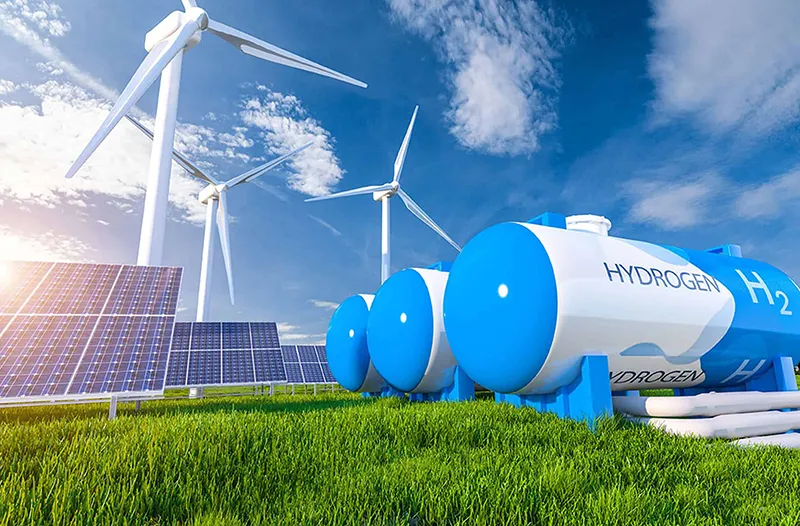
From a long‑term perspective, SOFC can be coupled with SOEC (Solid Oxide Electrolysis Cell). SOEC electrolyses steam to produce hydrogen with 30% lower energy consumption than low‑temperature electrolysis. Excess wind and solar power can be channelled to SOEC for hydrogen‑based energy storage; when power is needed, SOFC generates electricity from hydrogen, forming a zero‑carbon closed loop of “green power‑green hydrogen‑power generation”.
Yantai Dondel Hydrogen Technology Co.,Ltd.’s Perspective on SOFC Development
Within SOFC systems, Yantai Dondel Hydrogen Technology Co.,Ltd. does not occupy the most visible link. While stacks are core hardware and integrators face end customers directly, the Company delivers invisible yet indispensable intermediate‑link components.
It is precisely these “invisible” links that define how reliably and durably SOFC systems can perform. The sealing performance of every hydrogen recirculation pump and every hour of field‑operation data lay the groundwork for enhanced reliability across the whole industry.

SOFC is not an emerging technology. It has existed and been under‑appreciated for a very long time. Now it returns to the spotlight amid power shortages faced by AI data centres. Yet technological value is never defined by media attention; it is defined by real‑world operating cases.
Whether this industry can thrive hinges on every participant delivering time‑tested products. Yantai Dondel Hydrogen Technology Co.,Ltd. is committed to being that time‑tested link, contributing Dondel strength to the new‑era development of this mature technology.