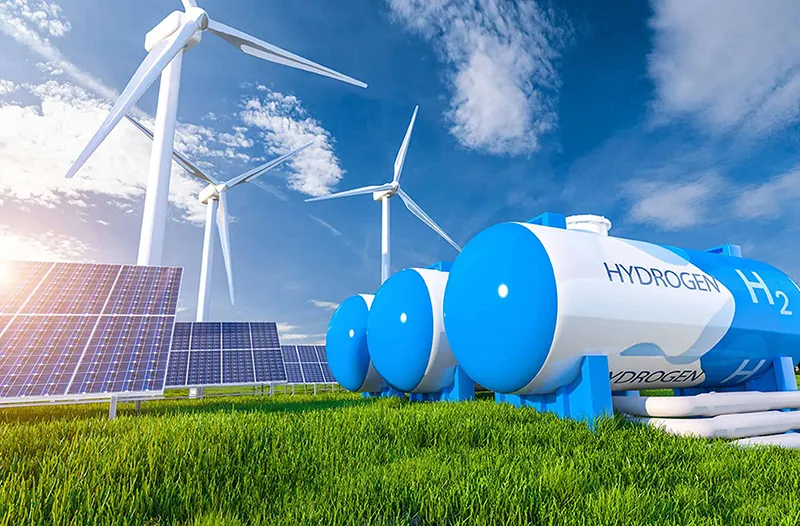
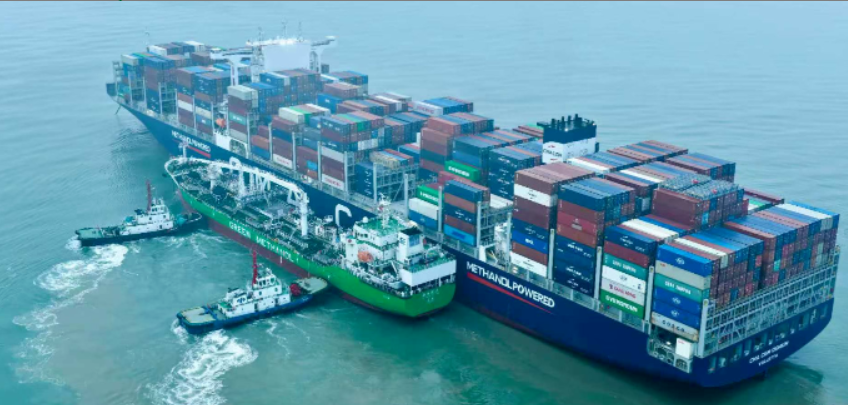
At the Port of Shanghai, a methanol-powered container ship completes bunkering and heads out to open sea. Few would guess that the methanol in its fuel tanks began its journey at a wind farm in Taonan, Jilin — two thousand kilometers away. Wind power generates green hydrogen; the green hydrogen is synthesized into methanol; the methanol is transshipped through the Port of Dalian and delivered to Shanghai.
Why turn a gust of wind from Northeast China into methanol and ship it all the way to Shanghai? And why has green methanol suddenly become such a sought-after commodity?
1. Shipping Is Being Forced to Change Fuel
For decades, ocean-going cargo ships have run mainly on heavy fuel oil — cheap and energy-dense, but high in sulfur and heavily polluting.
That route is now being closed off. The International Maritime Organization (IMO) has proposed achieving net-zero emissions around 2050, with 2030 emissions at least 20% below 2008 levels. The EU’s FuelEU Maritime regulation has already taken effect, and the EU ETS carbon levy has been implemented.
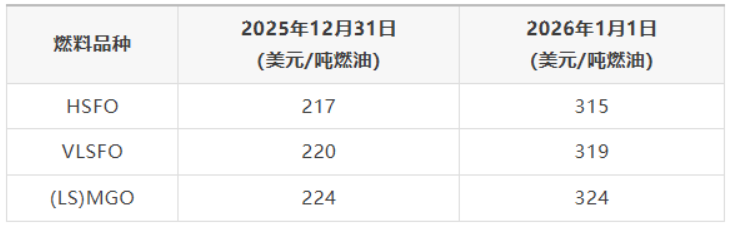
The compliance cost of burning heavy fuel oil rises year after year, leaving shipowners no choice but to switch fuels.
Methanol’s advantage is that it is practical: it is a liquid at ambient temperature and pressure, existing storage and bunkering facilities can be used with only minor modifications, and engine technology is relatively mature. Green ammonia is truly zero-carbon, but it is highly corrosive and its engines are not yet mature, making rapid deployment difficult in the near term. The industry consensus is that methanol will carry the transition, while ammonia is the longer-term direction.
2. A Rapidly Expanding Fleet Exposes a Huge Supply Gap
Once demand is locked in, growth becomes startling.
Globally, 17 methanol-powered vessels entered service in 2024; 58 more were commissioned in 2025, bringing the cumulative total to 105. By 2028, the fleet is expected to reach 387 vessels — nearly a fourfold increase in three years.
In 2025, the global methanol fleet required roughly 2.61 million tonnes of fuel per year. Including vessels on order and under construction, potential annual demand has already exceeded 11 million tonnes.
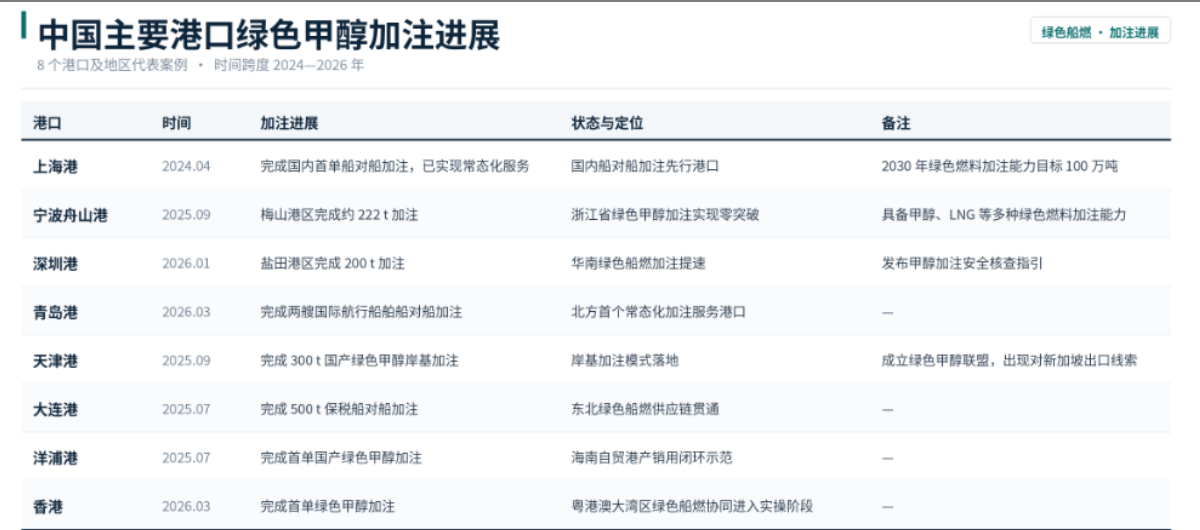
The bunkering network is expanding in step. As of April 2026, seven Chinese ports — including Shanghai, Ningbo-Zhoushan, Shenzhen, and Qingdao — have carried out actual green methanol bunkering operations.
Supply, however, is clearly lagging. By the end of 2025, China’s annual green methanol production capacity stood at only about 380,000 tonnes. Hundreds of thousands of tonnes of capacity against demand measured in tens of millions makes the shortfall plain to see.
Yet green methanol capacity cannot simply be expanded at will. The real bottleneck lies in the word “green.”
3. Why Has It Only Become Viable Now?
The “green” in green methanol comes from green hydrogen. The logic is straightforward: green electricity produces green hydrogen, and green hydrogen is combined with captured carbon dioxide to synthesize methanol. Yet for years this path led nowhere — not because the technology failed, but because the numbers did not add up.
Electricity accounts for 60–70% of the cost of green hydrogen. Every RMB 0.1/kWh reduction in power price lowers hydrogen production cost by only about RMB 5.5/kg. In the past, wind and solar installations were limited and green power was not cheap, so green hydrogen cost long hovered around RMB 27/kg. Synthesizing methanol from hydrogen at that price could not be economically justified.
The turning point came in the past two years.
By the end of September 2026, China’s cumulative installed wind and solar capacity reached 2,010 GW, roughly half the global total. In the first three quarters of this year alone, new installations amounted to 170 GW.
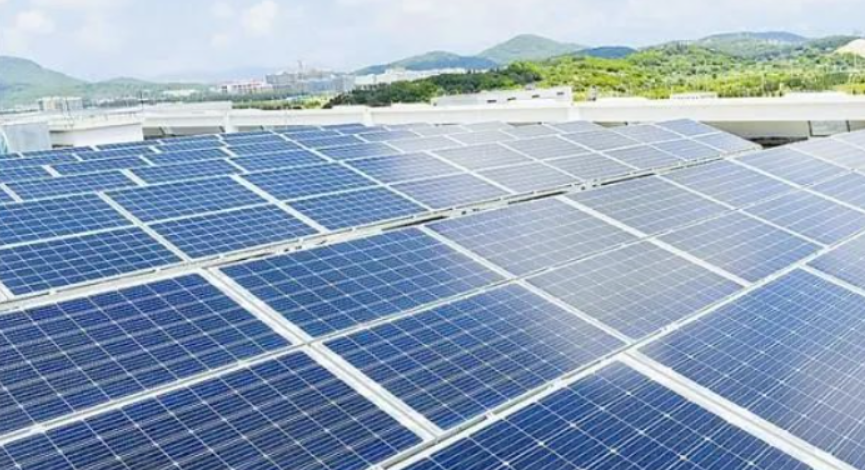
As economies of scale continue to materialize, green power costs keep falling: at large wind and solar bases in Northwest and Northeast China, green electricity prices have dropped to RMB 0.15–0.2/kWh, with some projects in Inner Mongolia at just RMB 0.168/kWh. Backed by low-cost green power, regional green hydrogen costs have fallen in tandem — to RMB 13–15/kg in the Northwest and RMB 15–17/kg in the Northeast.
Equipment costs have fallen just as sharply: the price of a mainstream 1,000 Nm³/h alkaline electrolyzer dropped from about RMB 7 million per unit in 2023 to around RMB 2.5 million in 2025 — a decline of more than 60%.
Add to this the 2026 policy allowing direct green power connections, under which green electricity can bypass the public grid and supply hydrogen production directly, and the room for further cost reduction widens again.
With these three forces combined, the economics of green methanol hold up for the first time. The places richest in resources are the first to make it work: in Xinjiang, Inner Mongolia, Jilin, and other regions with strong wind and solar resources, cheaper green hydrogen has made green methanol viable for export.
So the competition in green methanol looks like a contest over production capacity, but at bottom it is a contest over wind and solar resources and green power costs. Whoever stands closest to cheap wind and sun stands closest to green fuel.
4. From Green Power to Methanol: Compression Is the Easily Overlooked Key
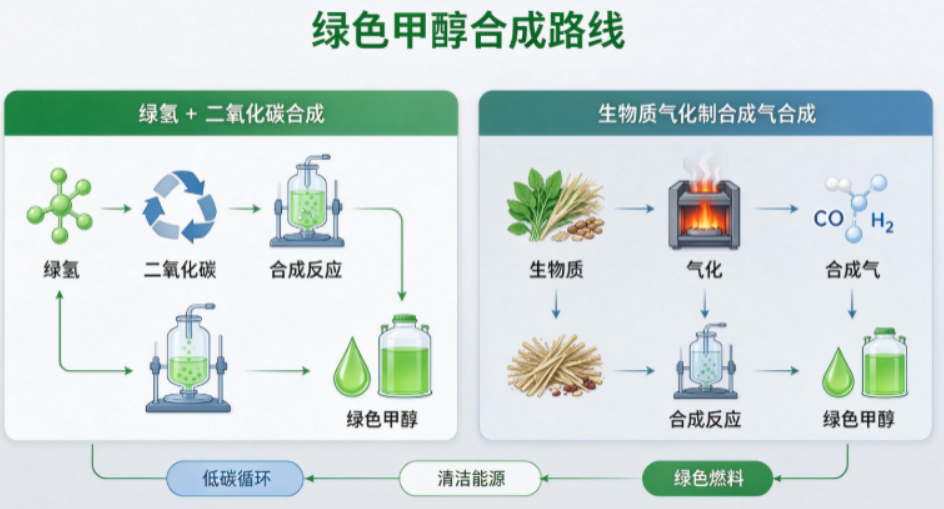
There are two main routes to green methanol: synthesis from green hydrogen plus carbon dioxide, and synthesis from syngas produced by biomass gasification. Either way, the pressurization and purification of hydrogen and syngas are unavoidable.
Hydrogen leaving an electrolyzer is at very low pressure and cannot be stored or fed directly into a synthesis reactor — it must be compressed in stages.
Unreacted gas from the synthesis reaction must be recycled and recompressed, which directly determines raw material conversion rates.
Residual hydrogen in the tail gas must be recovered with minimal leakage, which directly affects methanol yield.
This may look like an auxiliary stage, but its operating standards are extremely demanding. High-purity green hydrogen is expensive, and any leakage or contamination delivers an immediate loss. Synthesis catalysts are highly sensitive to pressure and gas purity, and the entire unit must run continuously and stably over long cycles.
High pressure, high purity, and zero leakage are precisely where diaphragm compressors excel. A metal diaphragm isolates the hydrogen from the hydraulic medium, minimizing contamination and leakage risk — a natural fit for the strict hydrogen purity requirements of green methanol projects.
5. Dondel: From a Single Compressor to a Green Fuel Chain
Dondel has long specialized in high-pressure diaphragm compressors, and the technical challenges described above are precisely the hard problems the company has been grinding through for more than a decade.
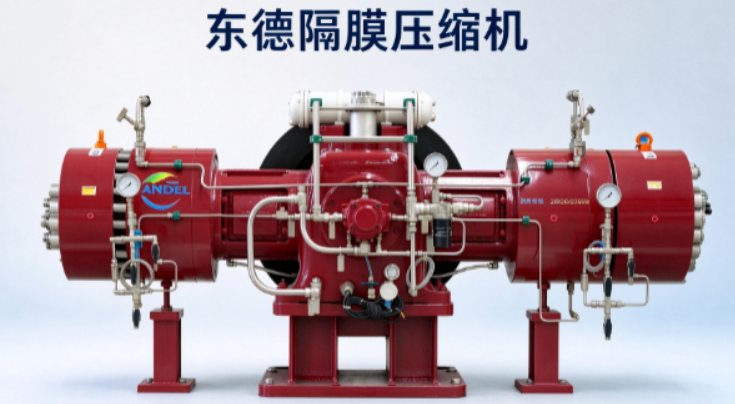
On pressure: in 2023, Dondel launched China’s first commercialized 90 MPa diaphragm compressor for hydrogen refueling stations. The ionic liquid sealed compressor developed jointly with Xi’an Jiaotong University achieves discharge pressures above 100 MPa and a single-unit capacity of 50,000 Nm³/h. This high-pressure, high-capacity technology base shares the same roots as green hydrogen compression.
On purity: the diaphragm approach uses a diaphragm to separate gas from hydraulic oil, achieving zero gas contamination and near-zero leakage — particularly critical for protecting synthesis catalysts and reducing hydrogen losses.
On reliability: green methanol projects must adjust load in response to fluctuations in wind and solar generation, so equipment has to withstand frequent starts and stops. Through coordinated optimization of diaphragm cavity profiles, hydrogen-embrittlement-resistant materials, and cooling systems, Dondel has extended diaphragm service life to 6,000–8,000 hours.
On this technology base, Dondel has long since moved beyond being a single-machine equipment supplier.
Across green fuel sectors — green hydrogen, green ammonia, green methanol, and SAF (sustainable aviation fuel) — its business extends along the process chain, upgrading from single-unit supply to integrated equipment, engineering, and scenario solutions. The fast-emerging green methanol industry is Dondel’s new main battlefield in the marine fuel market.
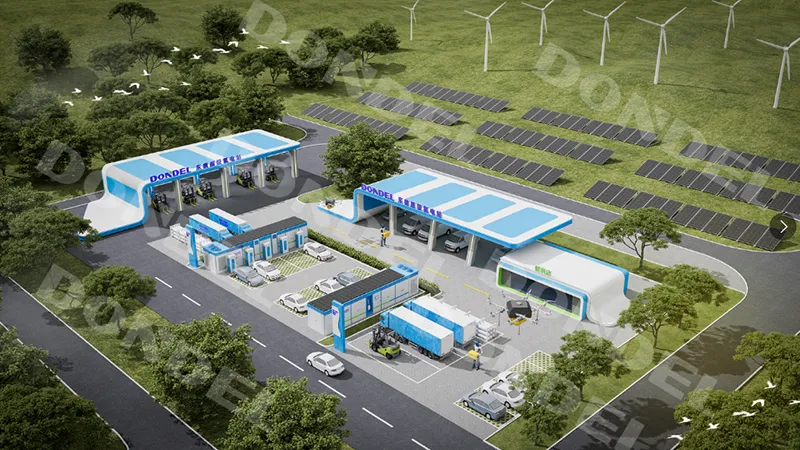
Dondel’s positioning continues to evolve: rooted in the manufacture of core equipment such as diaphragm compressors, it participates deeply across the entire green fuel value chain, building a green energy ecosystem spanning production, storage, transmission, and end use.
This is not simple business expansion but a natural extension of technical capability. Every stage of green fuel production imposes rigid requirements for the stable handling of high-pressure, high-purity gases — exactly the direction the team has pursued for over a decade.
Closing Thoughts
Wind from a single wind farm passes through electrolysis, compression, and synthesis, crosses two thousand kilometers, and becomes the power that drives an ocean-going vessel across the globe.
This transformation of marine fuel is a contest not only of wind and solar resources and synthesis processes, but of the industrial confidence that comes from every piece of core equipment on the chain running stably over the long term. What Dondel aims to be is not merely a supplier of equipment, but a co-builder of the industry — one that turns green power into green fuel and sends it out to sea.